
UltraFuel


ULTRAFUEL 1:0.8
Swipe to explore
Just what you need. Nothing more, nothing less.
Maltodextrin and fructose. Two carriers, higher absorption.
Energy and electrolytes in a single formula.
The last mile is as strong as the first mile.
ULTRAFUEL SERIES
Scientifically formulated fuels.
Just what you need, nothing more, nothing less • UltraFuel 2:1 • UltraFuel 1:0.8 • UltraEndurance
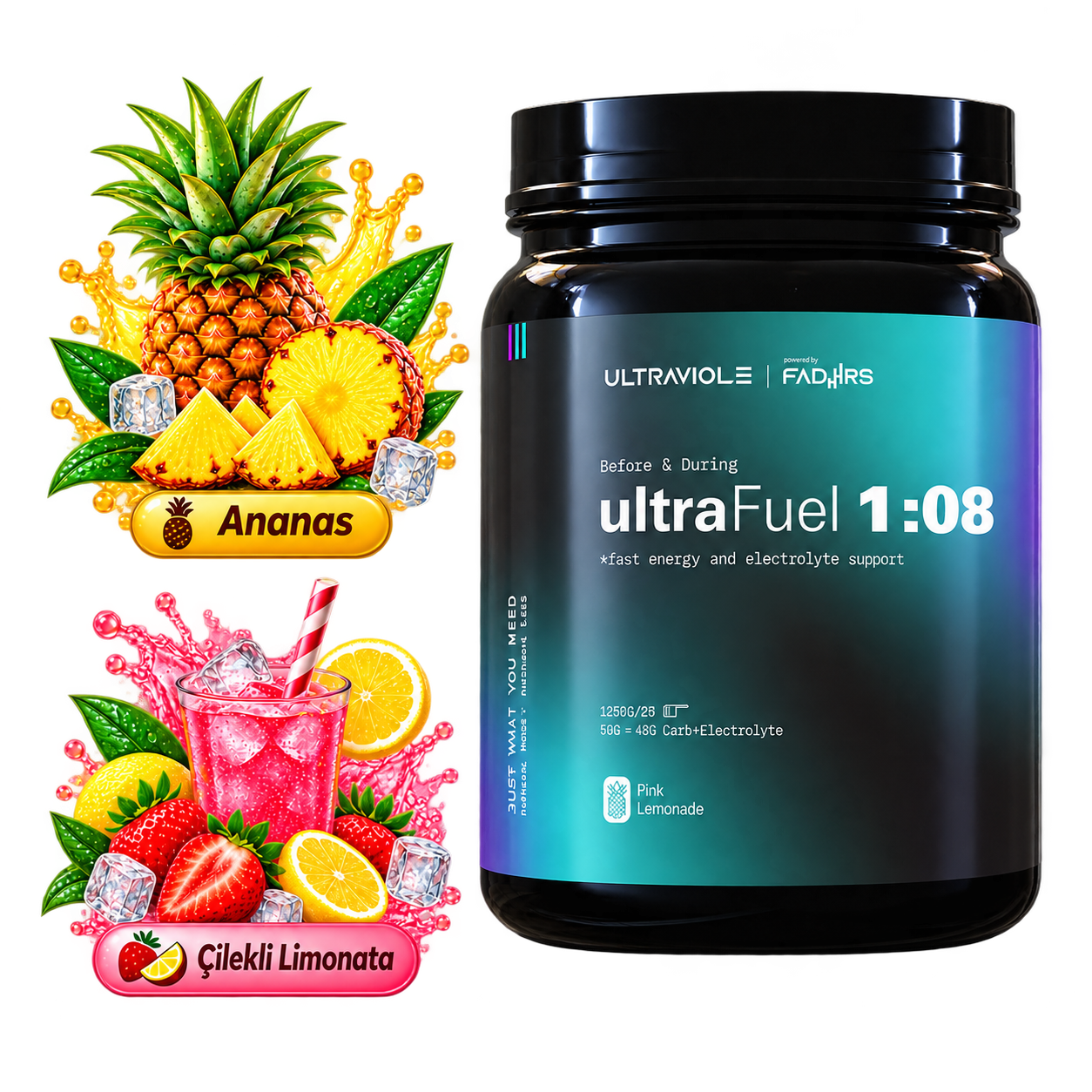
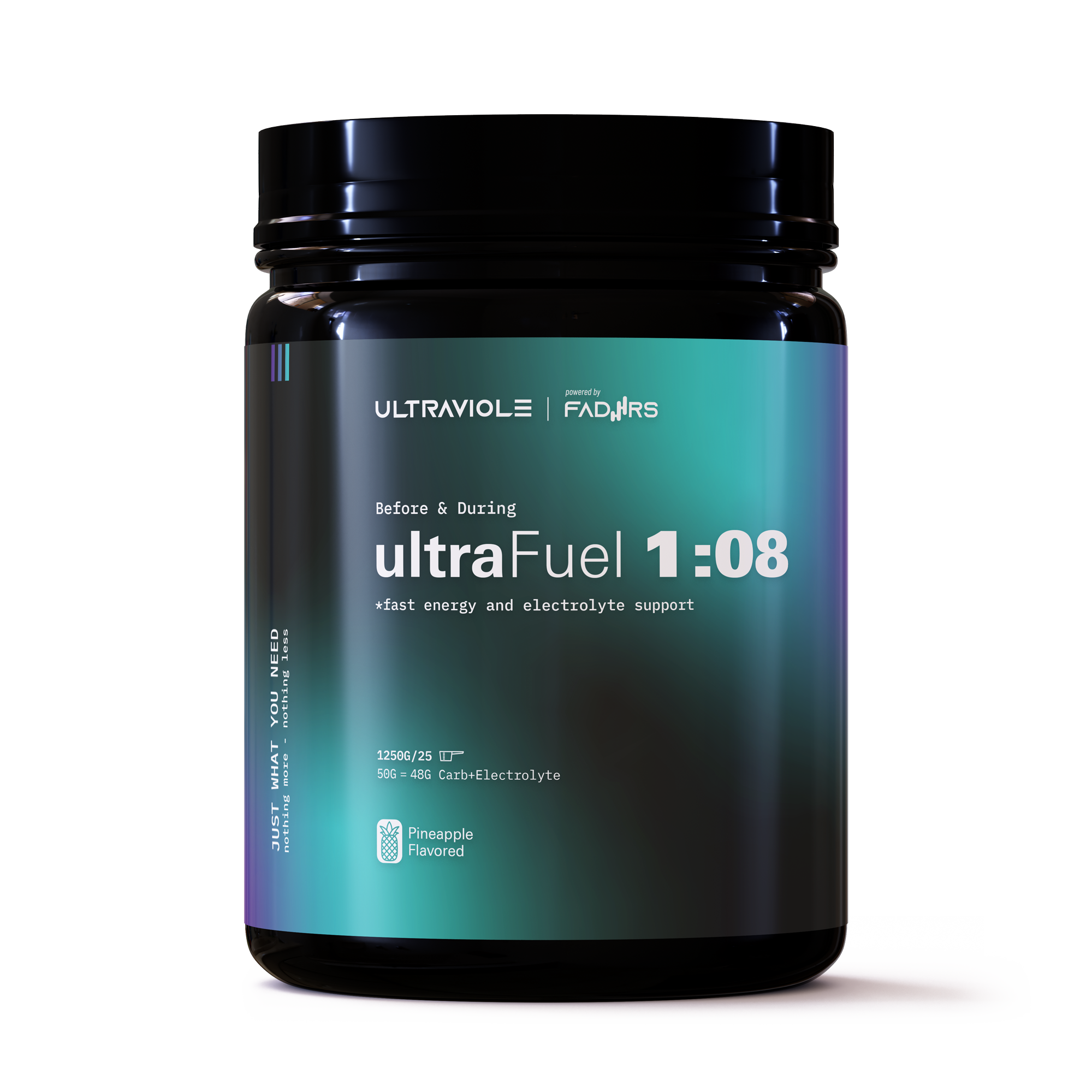

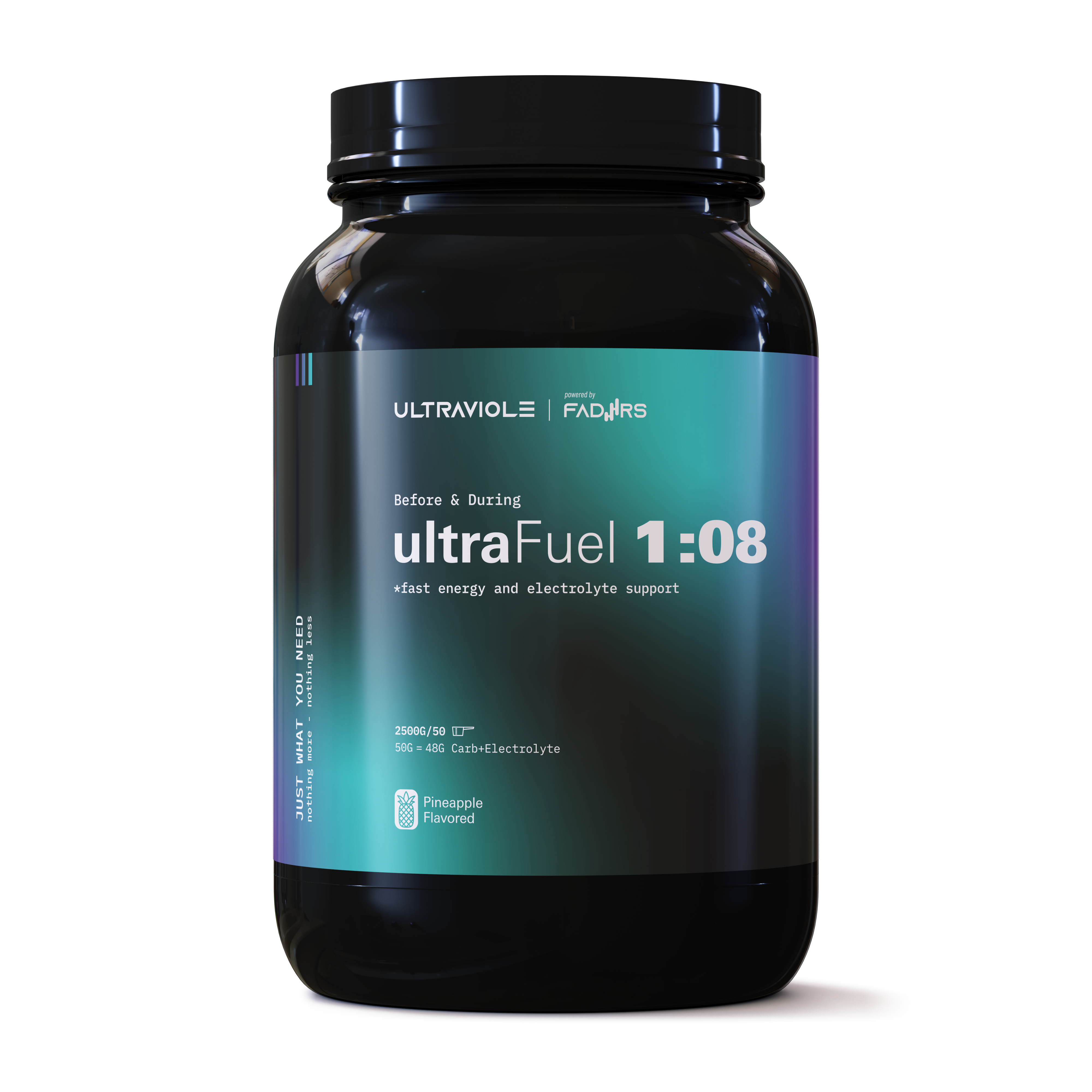
RENEWED PRODUCTION PROCESS
The formula and production process of our UltraFuel products have been updated. The foaming issue observed in previous production batches has been resolved, and the electrolyte balance and mixture composition have been revised.
All UltraFuel products currently on sale belong to the updated production batch. Only UltraFuel 2:1 1250 g continues to be offered from the previous production batch due to current stock levels. Users who prefer to avoid foaming during preparation may choose our UltraFuel 2:1 2500 g or UltraFuel 1:0.8 products.
The mold change for our gel products has been completed. Our work continues as we transition to a more durable and convenient packaging design.
IN A SIMPLE WAY
-
Every 30 minutes, 45 g of carbohydrates
Each gel contains 45 g of carbohydrates. During training and races, depending on the intensity, consuming one every 20–30 minutes helps maintain sustained energy levels.
-
Two carriers, higher absorption capacity
Maltodextrin and fructose are absorbed in the intestine via different transporters (SGLT1 & GLUT5). This mechanism allows for better tolerance of higher carbohydrate intake compared to single-source carbohydrates.
-
Energy and electrolytes in a single formula
The electrolyte content provided with carbohydrates helps maintain fluid balance, optimize hydration, and sustain performance during prolonged exercise.

*fast energy and electrolyte support
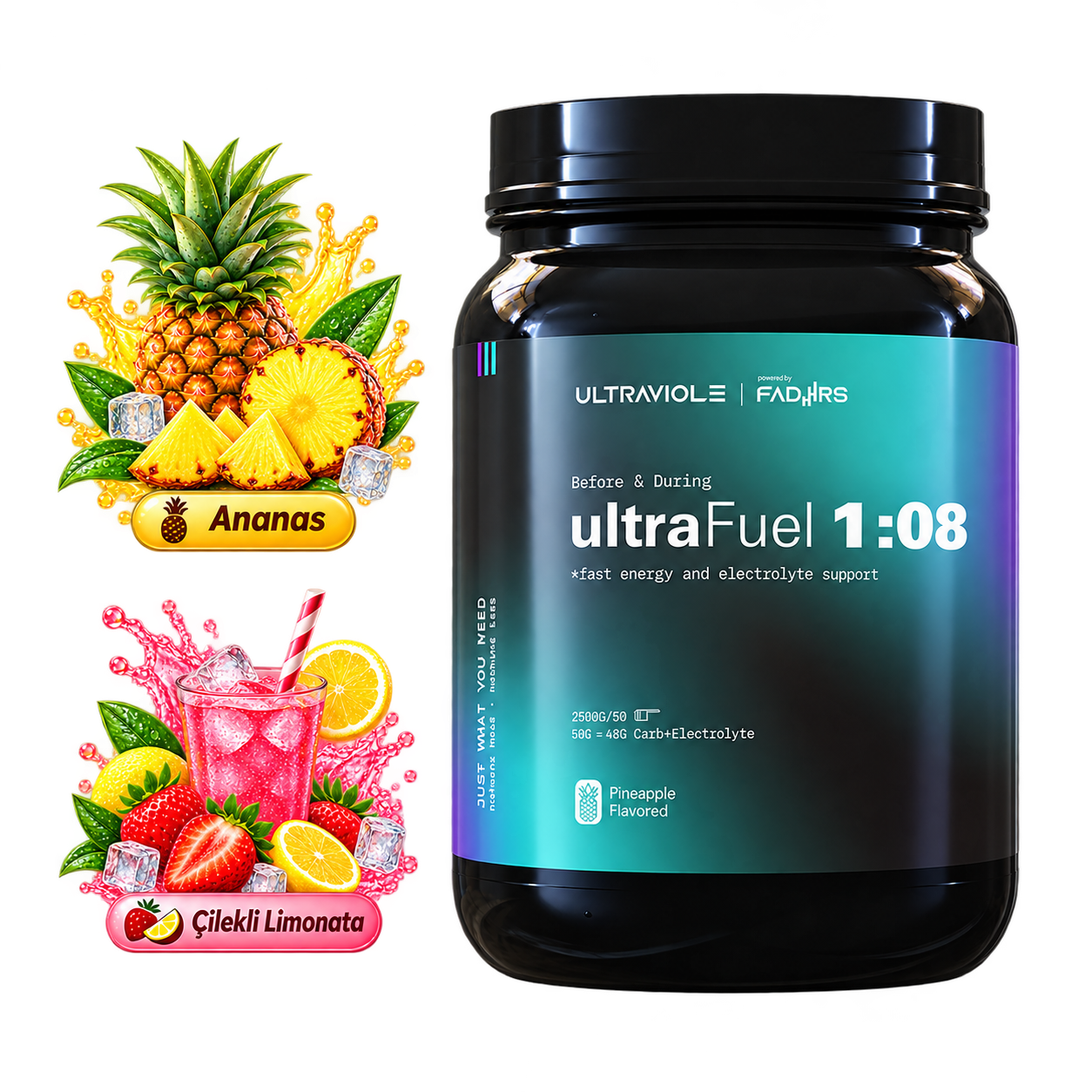
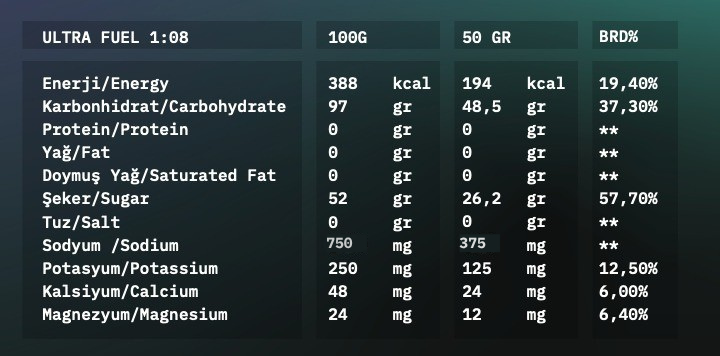
UltraFuel 1:08
UltraFuel 1:08 is a next-generation carbohydrate source specially developed for endurance athletes, with maltodextrin and fructose balanced at a 1:0.8 ratio. This ratio provides optimal absorption and energy conversion for athletes aiming to consume 90 grams or more of carbohydrates per hour.
Next-generation research shows that carbohydrates consumed at a 1:0.8 ratio achieve higher oxidation rates, increase the amount of fuel delivered to the muscles, and provide greater tolerance in the digestive system. UltraFuel 1:08 maximizes performance during training and racing while helping to maintain gastrointestinal comfort during prolonged use.
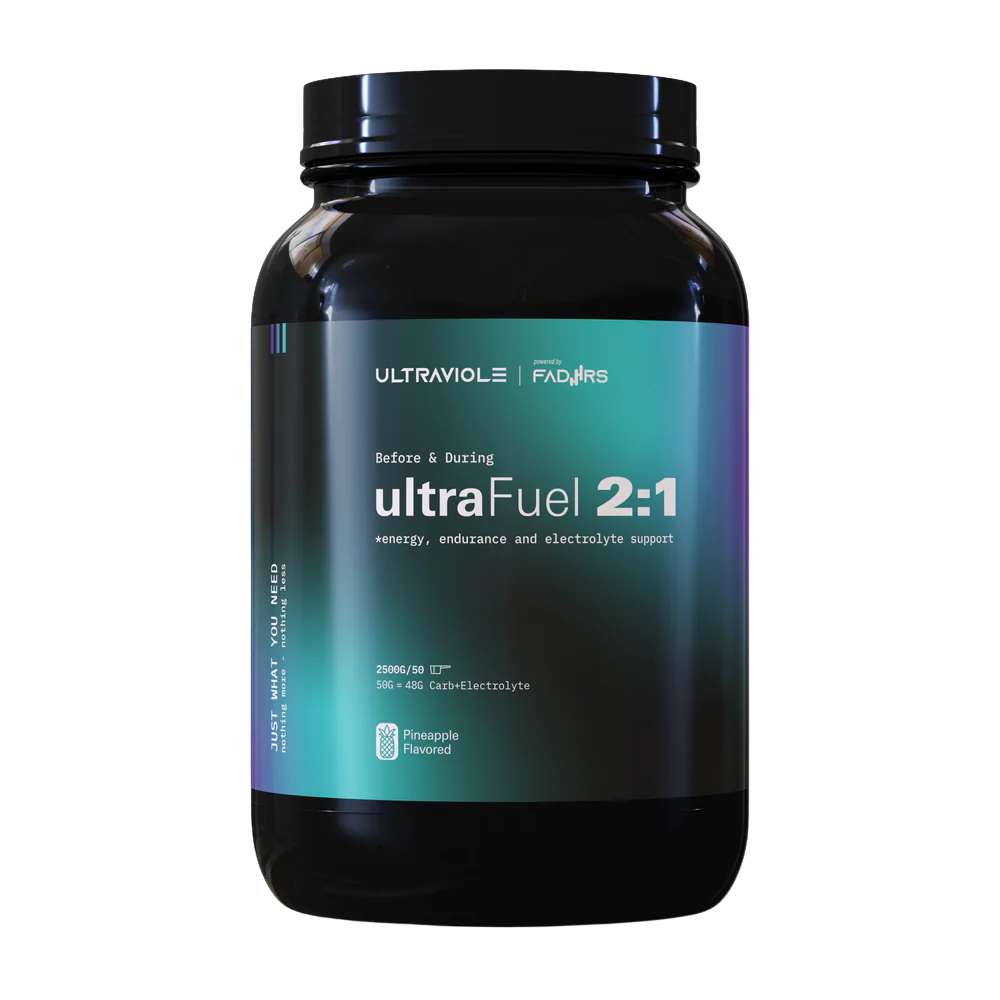
*energy, endurance and electrolyte support
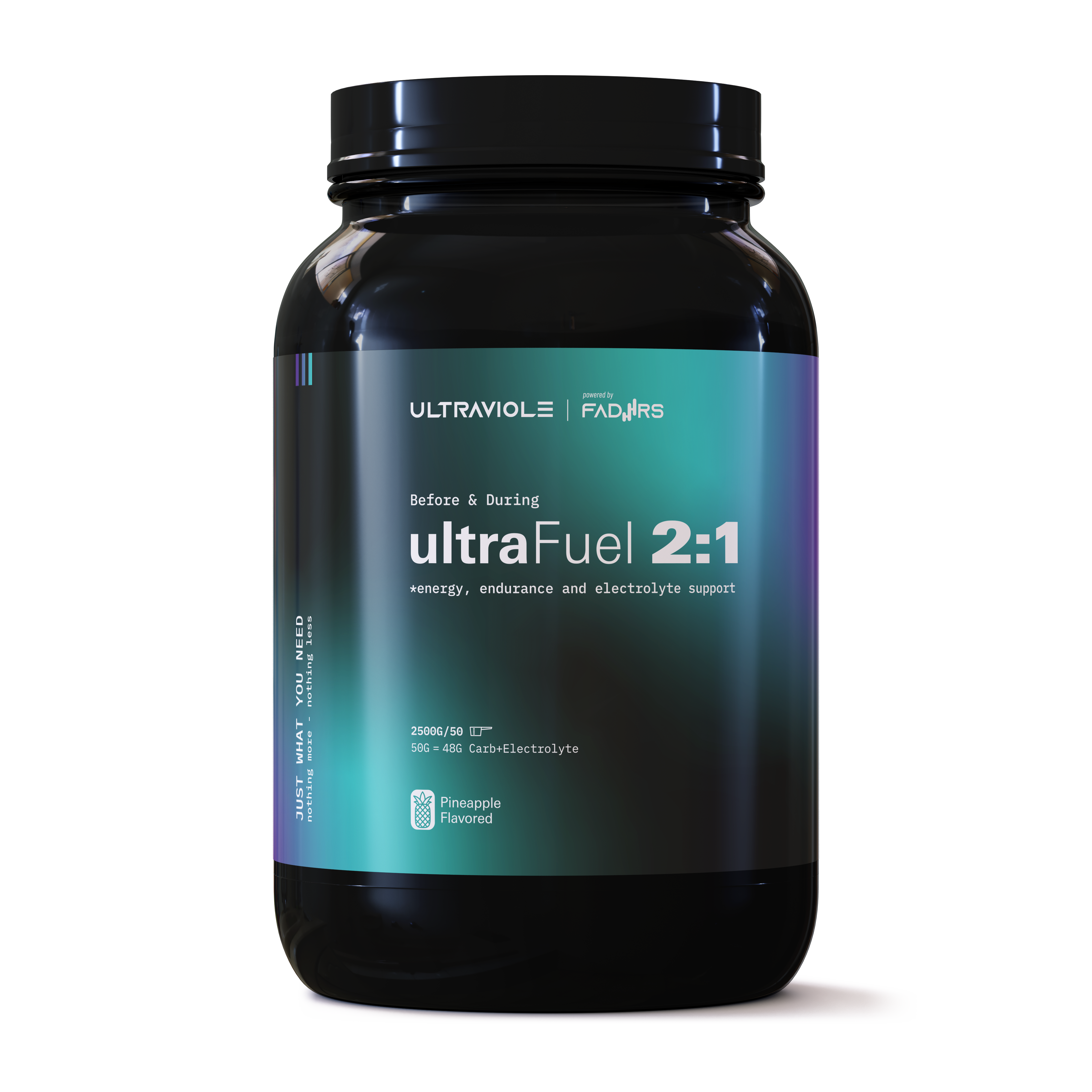
UltraFuel 2:1
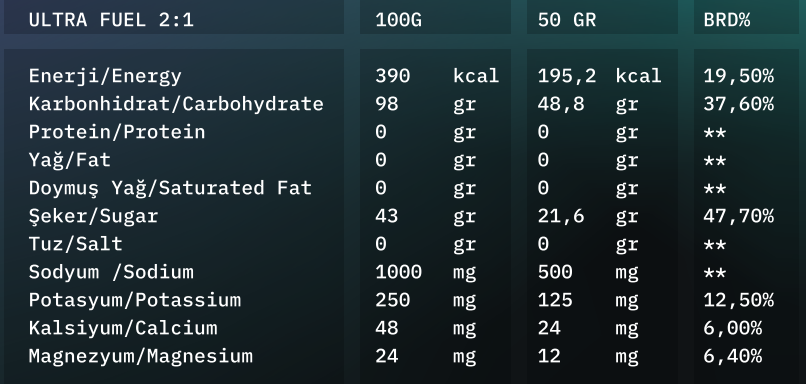
UltraFuel 2:1 is a carbohydrate source specially developed for endurance athletes, with maltodextrin and fructose balanced in a 2:1 ratio. Thanks to its balanced composition, it can be safely used before, during, and after training. While its high carbohydrate content quickly and effectively replenishes energy stores, its electrolyte supplement helps balance fluid loss.
*balanced energy
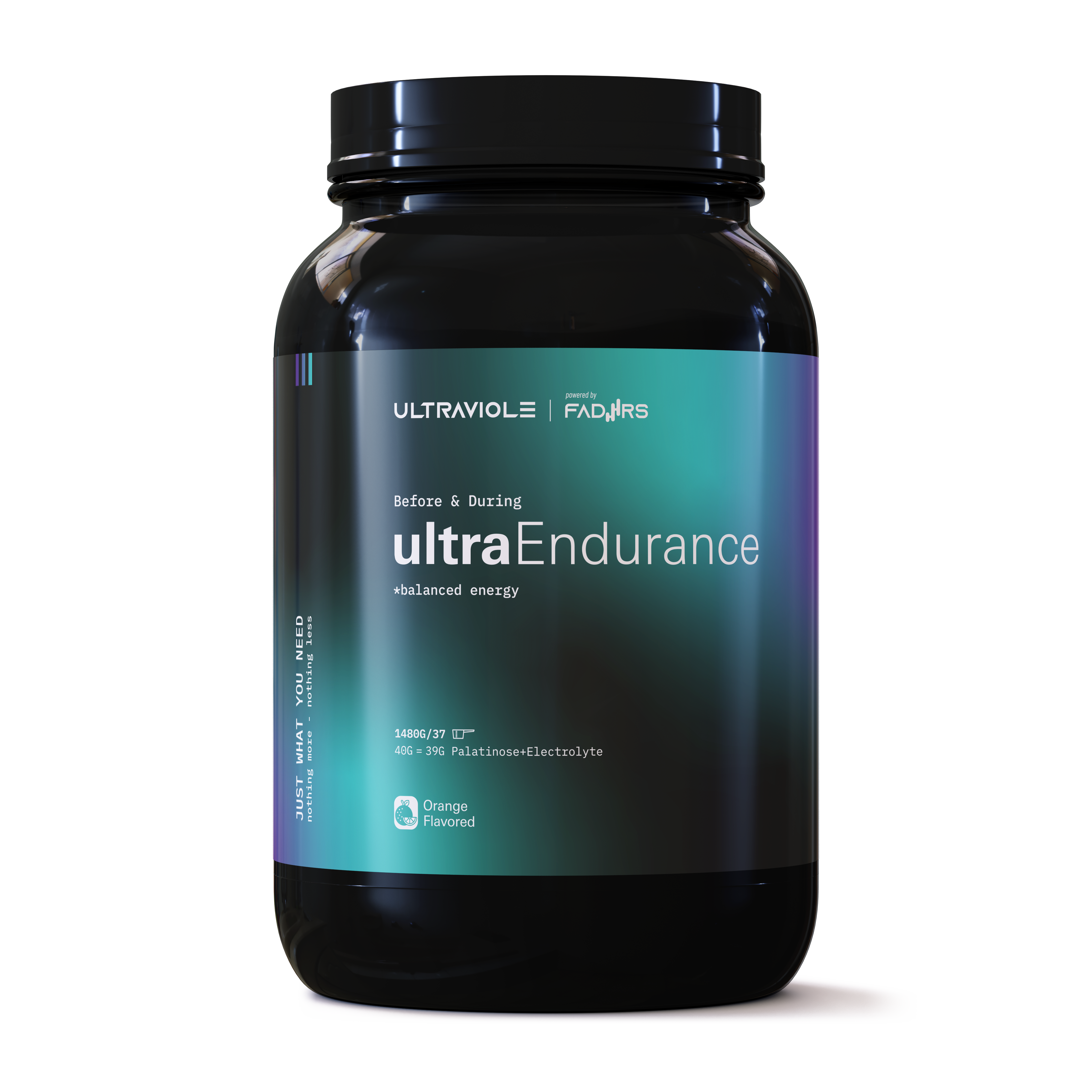
UltraEndurance
UltraEndurance is a special carbohydrate source containing low-glycemic-index Palatinose (isomalulose). Compared to traditional high-glycemic-index carbohydrates, it raises blood sugar more slowly, providing a long-lasting and sustained release of energy.
Do You Need Information?
Frequently Asked Questions
For more information, you can write to us through the contact form.
Both approaches are based on the “multiple transportable carbohydrates” principle: glucose and fructose are absorbed in the intestine via different transporters (glucose-dominant sources mostly through SGLT1, and fructose through GLUT5). When a single type of carbohydrate is increased significantly, the relevant transporter can approach “saturation,” and after a certain point, the rate of absorption becomes limited; this can result in a feeling of “having energy but not being able to use it” or GI issues.
-
2:1 (maltodextrin:fructose) is a classic ratio that has been widely used for years; it is considered a “safe starting point” for many athletes.
-
1:0.8 (maltodextrin:fructose), by slightly increasing the fructose component, aims to increase the total absorbable carbohydrates, especially at high intake targets, and improve tolerance in some athletes .
The most critical point: there is no single answer to the question “which ratio is better?” Even with the same grams/hour target, factors such as individual differences in gastric emptying, intestinal transporter density, stress, temperature, and intensity lead to different results. Therefore, the most scientific approach is to try both ratios in training and gradually increase the target intake.
The “g/hour” issue depends on two things: (1) duration of activity + intensity, (2) available glycogen and fat oxidation capacity. General practical approach:
- Short/moderate duration & lower intensity: even a lower intake may be sufficient.
- Long duration & race pace / high intensity: carbohydrate needs increase; because carbohydrates play a larger role in energy production at high intensity.
There is an important distinction in the science: “intake” and “oxidation” are not the same thing. Taking in 90g per hour does not always mean you will burn 90g; absorption and tolerability limits come into play. Therefore, the most solid approach:
- Set a starting goal (e.g., a moderate goal),
- Monitor whether you tolerate this goal during training,
- Progress with small increases every 1–2 weeks (gut training).
The goal here is not to “load all at once,” but to prevent a performance drop (bonk) with regular, sustainable intake.
In terms of performance, the goal is not to “recover when energy drops,” but to fuel so that a drop does not occur. This is why most successful strategies operate on the principle of “start early + maintain consistently.”
Scientifically, there are two mechanisms at play here:
- Continuity of carbohydrate oxidation: regular intake keeps the contribution of exogenous carbohydrates to energy levels stable.
- Central perception of fatigue: oral carbohydrate intake (even just rinsing the mouth) can affect the perception of effort; in practice, it helps “maintain pace.”
Application: After the event has started, begin with small doses “without waiting too long” and gradually build up to your planned g/hr target.
In terms of GI tolerance, the method of dividing the dose works better in most athletes. Because:
- If the stomach is suddenly filled with a high concentration, gastric emptying may slow down.
- If there is a sudden high load in the intestine, the osmotic effect may increase; this also increases the risk of cramps/bloating in the stomach.
Therefore, the “small intake every 10–15 minutes” approach both keeps carbohydrate oxidation more stable and makes tolerance easier.
During prolonged exercise, performance is limited not only by “fuel” but also by fluid and electrolyte balance. You lose sodium primarily through sweat; the amount lost varies greatly from person to person (sweat rate, air temperature, clothing, intensity, genetics).
Sodium planning is important for two reasons:
- Plasma volume and circulation: excessive fluid loss impairs performance.
- Gastrointestinal tolerance: in some athletes, an appropriate sodium/fluid balance can also improve tolerance to high carbohydrate intake.
But there is no “single correct mg” here either. The most scientific approach is to personalize it by monitoring sweating in hot weather and during long rides, along with symptoms such as urine color, headaches, and cramps.
Palatinose (isomaltulose) is generally known for its slower digestion / lower glycemic response profile. This can feel more “balanced” in some scenarios (steady pace, prolonged low-to-moderate intensity, throughout-the-day energy management).
But when energy demand rises rapidly at high intensity (tempo/intervals), the need for carbohydrates that can be used more quickly may increase. Therefore, it would be scientifically more accurate to position Palatinose not as “better in every situation,” but as the right tool for the right scenario. For many athletes, the best approach is to combine carbohydrate types according to the intensity of the activity.
Our Blog Posts
How Do Electrolytes Support Muscle Function?
Sustainability of performance in endurance sports depends on two things: system stability during exercise and efficient recovery after exercise. Electrolytes sit at the intersection of these two ar...
Read more
Fueling Strategy for Ironman 70.3: Boost Your Performance with UltraFuel 2:1 and 1:0.8
Succeeding in an Ironman 70.3 race is not just about training hard, but also about fueling your body correctly. Fueling is key. To maintain your energy, avoid hitting the wall (suddenly running out...
Read more
Oakley PRIZM Technology: See Detail, Make Decisions Faster At Ultraviole, we follow the path of science, sport, and independence. That is why when choosing performance eyewear, we look for more tha...
Read more


Koleksiyon hakkında
UltraFuel Karbonhidrat & Elektrolit

Markamız üzerinden gerçekleştireceğiniz tüm alışverişlerde; hızlı teslimat, çözüm odaklı destek ve iptal, iade, değişim süreçlerinde şeffaf yaklaşımımızla güvenilir bir alışveriş deneyimi sunmayı amaçlıyoruz.
Adres: Bahriye Üçok Mahallesi 1879/1 Sokak No: 10/B, Karşıyaka/İzmir
İletişim: 0506 145 68 67
E-posta: ultraviole.destek@gmail.com